Buy THESE Weight Plates For Your Home Gym In 2026
Last updated on September 2nd, 2026 at 04:24 pm
I’ve been lifting in my garage since 2013. In that time I’ve spent countless hours on forums, YouTube, in the DMs, seeing one question come up over and over and over. What kind of weights should I buy? I get it. You’ve got a dozen options from every company, and every time you think you have the answer some guru tells you it’s the wrong decision. On behalf of everyone, I apologize. My goal today is to take that confusion and answer it very simply.
I’ll walk through the basics of weight plates, what to avoid at all costs, what to consider before buying, and then drop some recommendations. What I have in my gym might be different than what you should end up buying, because not every home gym is the same. But I’ll make sure to help you get to the right place. Let’s dig into some weights.
Key Notes
If you choose wrong, you will ruin your entire home gym. Just kidding. Weights are going to be weights, they just cost more, look different, and achieve some slightly different goals.
Links throughout may include Affiliate Links. These help fund the site at no expense to you.

Quick Weight Recommendations
Buy a set of Olympic Bumper Plates from whomever you are going to buy your barbell, bench, or rack from. There is a really good chance that they are “good enough” at a decent price. Just buy the set that matches your budget and looks good. Happy lifting!

The Best BUDGET Weights For Most Home Gyms
Wal-Mart sells the Everyday Essentials Bumper Plates, and they are bizarrely better than expected and they are often on sale for a killer price.
The Best Iron Plates For Most Home Gyms
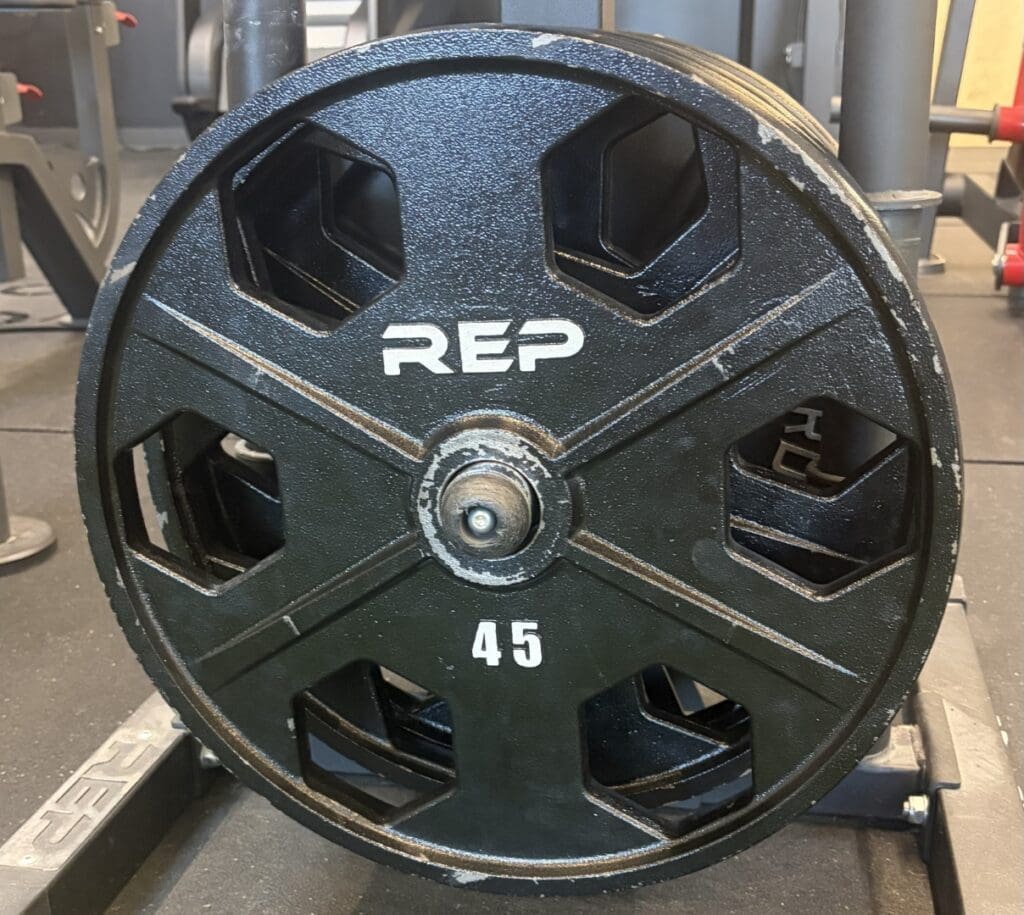
REP launched the original equalizers based on feedback from some old home gym community forums (which I was part of). Handles, accurate, thin, aesthetic. These are the real deal!

The Best Bumper Plates For Most Home Gyms
Rogue’s Echo Bumpers have won multiple times over on Reddit r/HomeGym for the best overall bumper plates. They NAIL the price to quality ratio that is perfect for a home gym.
Weights FAQs

Should I Buy Used Plates?
Yeah, definitely! My entire set of daily use plates is from an old Craiglist ad. They are from the 80s, and still kicking butt. The hard part is likely finding a full set for a decent deal that can’t be beat by a sale or discount code.
If you can find it though, this is a great way to go. Just don’t waste the next 6 months of lifting trying to find the perfect deal on used plates. And avoid the local resellers who list on Marketplace.
Does it matter what my weights look like?
In general, no. Your muscles don’t care if you have the prettiest of chrome calibrated plates or the dirtiest of dicks sporting goods iron plates you found at your neighbor’s garage sale.
But remember that these are going into your gym. So if you don’t care, it doesn’t matter. I always preferred my stuff to look a little nicer than scrap metal. If you end up with used plates that need some love, check out this article for my process in cleaning and painting
Should I buy iron or bumpers?
You could make a case for iron plates for a number of reasons. If you have machines in your gym, or you happen to find a really good deal on the used market or catch a sale online, or maybe you get into vintage weights. There isn’t anything bad about Iron, I use iron almost exclusively, I just wouldn’t likely buy them over bumpers in today’s home gym market for MOST home gym owners.
What Plates Should A Powerlifter Buy?
If you are a highly competitive powerlifter, you might want to consider calibrated powerlifting plates. These have a standardized diameter, thickness, weight, and even typically color. They follow the IPF standard regulations which is consistent across federations.
These are not the most user friendly plates to use for every lift, all day, every day. The thin profile and lack of lip and hub is often a pain to grab and move consistently. Plus these are more expensive, by a lot, compared to plates I’d normally recommend.
But, if you are attempting to chase down records in a competition, you need the right tools. There are a lot more options today than there were in years past. You could get a set of Weight It Out plates which are going to be thin and accurate, but not quite the same. They are cheaper and will get you damn close.
The real deal needs to come from companies like Rogue or IronBull.
What Plates Should An Olympic Lifter Buy?
Just life for competitive powerlifters, the official competitive bumper plates have specific colors, sizes, shapes, and more. So you might want to consider some IWF certified bumper plates so you can practice how you play.
Again, these are more expensive, and don’t offer any benefits outside of being exactly perfect for competition specs.
What Plates Should A CrossFit Athlete Buy?
You likely don’t need the super accurate competition plates, but bumpers are going to be the ideal solution for your various cleans, jerks, snatches and more. So I would lean towards my basic bumper recommendation of Rogue or go budget with the WalMart plates.
What are urethane plates?
Urethane is a different material used for the outside construction of plates. Iron is the most common plate, some have a rubber coating, some are housed in a rubber case like bumpers, some are steel, and some are urethane coated. There are probably other options too, but let’s not get too crazy.
Urethane is a higher end solution than typical rubber bumpers, as they provide less bounce but still a high level of protection. They are more durable. And they often have a very polished aesthetic. They come at a premium though.
You can also get Urethane coated iron plates, like the REP Equalizers. These are gorgeous and with the built in hand holds are super easy to move around a gym. But they are pricey above other options. Also consider that if you manage to scratch or dent or ding the urethane, you’ll forever have a marred plate. Which kind of defeats a large piece to why we bought them in the first place.
I probably wouldn’t buy urethane plates in a home gym unless if I was a person who had to have the nicest of everything.
What is the difference between rubber coated and bumpers?
Rubber coated plates have a thin layer of rubber surrounding a traditional iron plate. These are not meant to be dropped from any distance like Olympic lifts. Instead they are simply meant to provide a small protection to the plate from oxidation and provide the SLIGHTEST bit of sound dampening.
In general, I’m not a huge fan of rubber plates. Like the urethane, they are more expensive, without any big improvements anywhere. And rubber is even more likely to scratch and ding than urethane, meaning you could easily tear up the casing. Not ideal. If you found a good deal on some used ones, no issues. But I wouldn’t buy these over anything else.
Why are plates different colors?
The typical answer is because of competition standards. They made certain plates certain colors for accuracy of judging, weighing, and spectating. Everyone knows a green plate weighs a certain amount vs a blue plate.
The other answer is, because someone painted them that way. If I want, my plates can be blue or red or purple or rainbow. They are my plates. I can do what I want. So 2nd hand plates or plates you might acquire for their aesthetic appeal, might differ from competitive requirements.
Should I buy weight plates with handles?
Totally up to you. I’ve found over the years that plates with some form of lip, hub, or handle are easier to use day in and day out. My deep dish vintage plates have a nice lip on the outside, which gives my hand an easy place to grab it from and carry back and forth to the bar.
Plates with handles are easier to move and carry more than one at a time, even for smaller athletes, which can be more inclusive for your family members, save time in loading and unloading, and potentially be safer from accidental drops on feet.
Bumpers aren’t likely to have handles, but most will have some kind of small lip to help you hold onto them. So keep that in mind when purchasing.
Weight Is Weight, Right?

If you’ve ever looked around the internet for recommendations on Olympic Weights, you’ve probably come across at least a few people uttering the words “weight is weight”. The concept is that your muscles can’t tell the difference between the nicest, shiniest 45lb plate, and the dirtiest and grimiest 45lb plate. Lift 100lbs of concrete, steel, iron, or rubber… it is still 100lbs. In other words, weight… is weight.
As powerlifters and home gym owners there are other things to consider however when looking at purchasing weights.
Sanctioned Competition
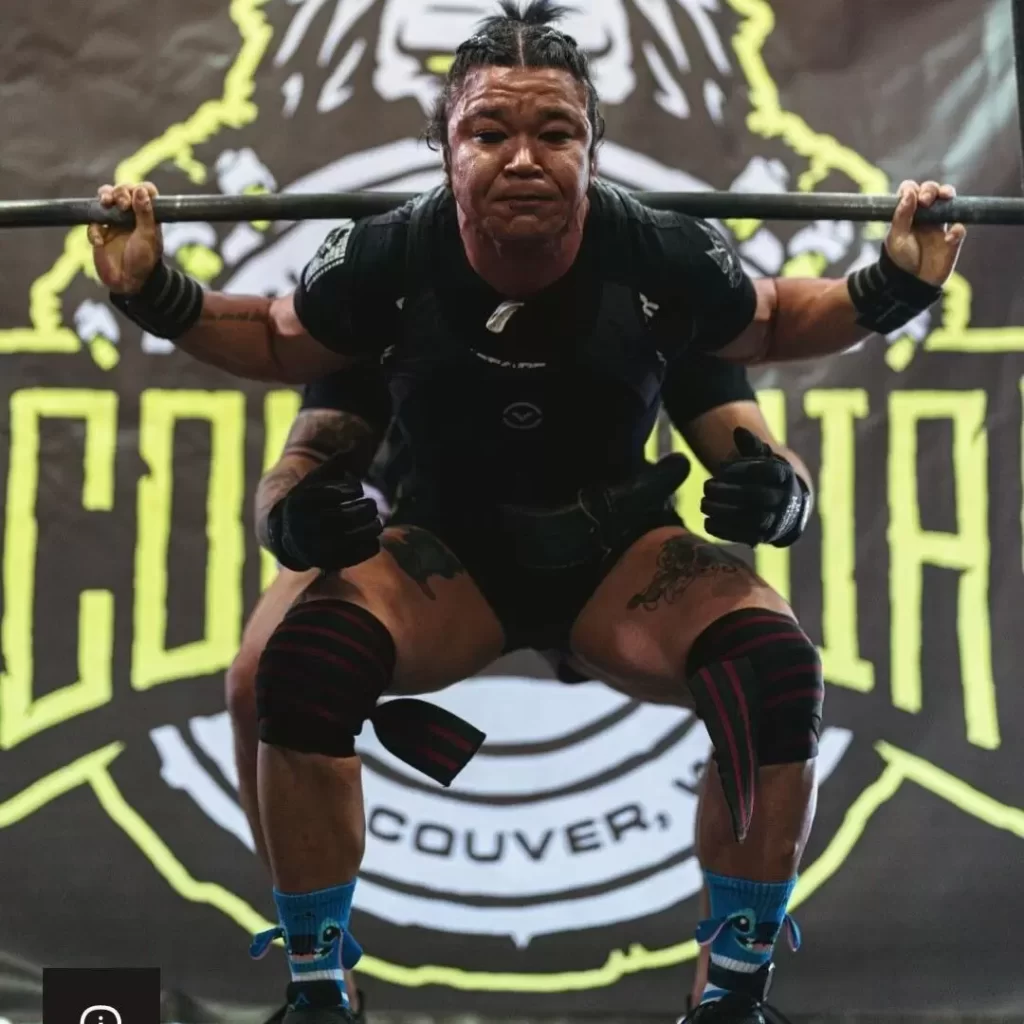
If you currently do, or plan to compete in a sanctioned powerlifting meet, they will use calibrated powerlifting discs. This is important to consider because calibrated plates are often MUCH thinner than your typical iron Olympic Weights. This doesn’t impact Squat or Bench much. But with more and more plates loaded on a bar it can impact a deadlift pretty dramatically.
The thicker Olympic Weights push the weight farther from the center of the bar, creating more whip potential, which creates a beneficial starting position. What this means is that the strongest lifters could basically be doing a rack pull with thicker plates due to the way they distribute the weight differently. I’ve seen a number of people state that their competition deadlift is lower than their gym deadlift because of this.
Accuracy
The other consideration, and this might be your biggest concern, is that cheaper plates can be drastically off in terms of their stated weight. A 45lb plate from certain manufacturers has been weighed in at almost 40lbs and up as high as 50lbs. Again, we are talking extremes here and mostly for those loading multiple 45s on a bar at once.
But do the math with me. If you loaded 5 plates per side on the bar where 5 on the left were 40lbs, and 5 on the right were 50lbs, you’d have 200lbs on the left and 250lbs on the right. That is a drastic difference and could very easily lead to injury. You can also just be entirely off in terms of what you think you are lifting.
Aesthetics and Others
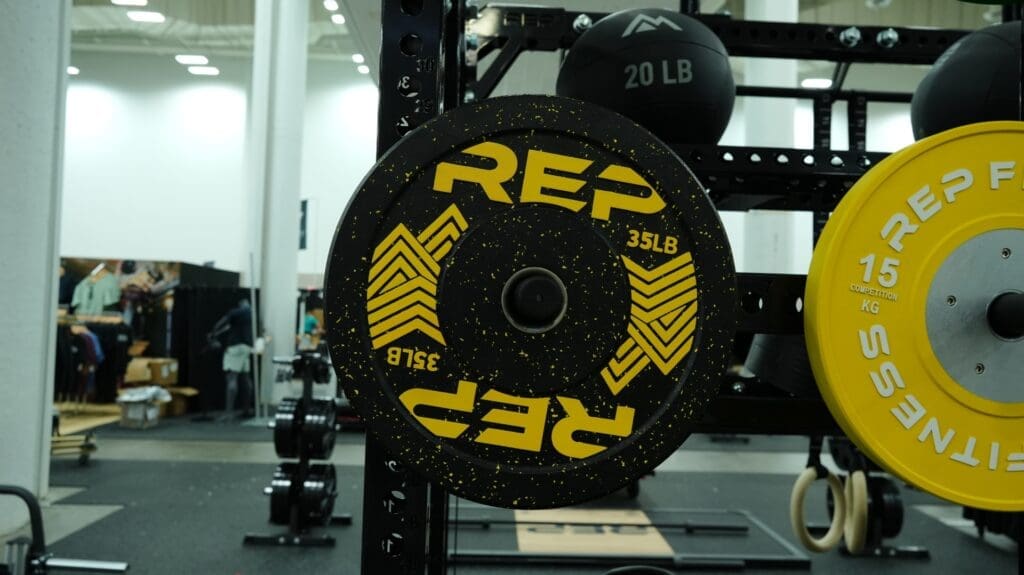
Less of a concern, and more of a want, the more aesthetically pleasing plates on the market tend to come from more reputable companies regardless of the make, model, and construction of the plates. Plates can come with handles, laser engraving, custom color sets, and a ton more.
What Weights NOT To Buy

In the world of weights, you have two basic sizes of plates. Standard, which have a 1″ hole in the center. And Olympic, which have a 2″ hole in the center. Standard used to be the… ahem… standard. When the world started moving towards the competition standard, olympic bars and plates became the norm.
Do NOT buy standard plates. The bars available today are cheap and prone to bending, the plates are prone to breaking, and they don’t fit the more common racks of today. You’ll be required to use older equipment, benches, collars, and more. And considering that the pricing isn’t drastically different, I just don’t see the point for MOST lifters to go that route.
The only exception to this is if you are a brand new lifter and manage to get a set for free on marketplace or from a family friend. I can excuse a great deal for a new lifter, but otherwise, skip these and stick to Olympic.
Odd Shaped & Sized Plates

The majority of weights are round. This is so that when you lift them, they don’t rotate oddly. And so that when you set them back down, they dont end up lopsided and shifting on you. Some manufacturers over the years have made plates in different shapes, like hexagons. I would avoid these for anything except a gym where you are loading up machines. For general lifting, stick to round plates.
The gold standard of plates come in 5lb, 10lb, 25lb, 35lb, and 45lb sizes. You might find smaller increments, but a typical set will have various pairs of these numbers. If you are buying kilogram weights, that would 2.5kg, 5kg, 10kg, 15kg, 20kg, 25kg.
Some companies have chosen to make weird jumps, like 32lb plates. Or they make 55lb plates. I would avoid these sets as anything out of the normal is a sign that they likely aren’t following industry standards, and thus have poor quality control.
What Weights TO Buy
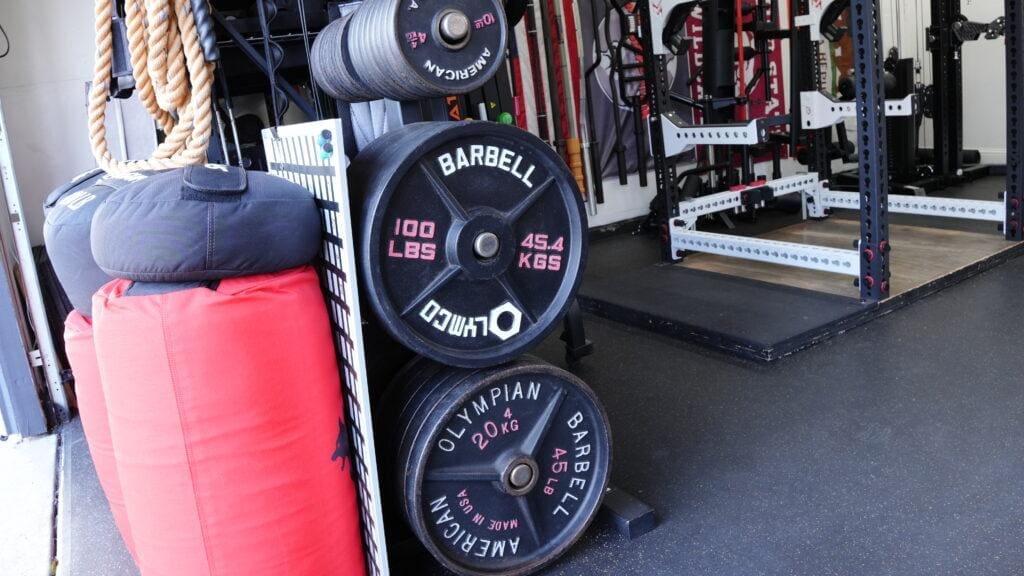
When I started my home gym, there were two options. You had bumper plates for CrossFit and Olympic lifters, and you had iron for everyone else. These came in a few different makes and designs, but that was the only answer.
Iron was cheaper than bumpers, and bumpers were so thick that if you lifted over 400lbs you might run out of room on your bar. While this is still potentially an issue, bumpers have come a long way in terms of their cost, durability, and design.
So much so, that even as a 600lb deadlifter, if I was starting over today, I’d grab a set of bumper plates. They are clean, easy to handle and use, keep the noise down, have metal inserts that make them slide on and off the bar easily, are typically more accurate, and with the newer slimmer designs can fit plenty on a bar.
If I was buying plates today to start my gym over from scratch, I would look at the following options:
- Rogue Echo Bumpers – This would VERY likely be my first choice. Nothing fancy, but they work and work well for a great price.
- Weight it Out – If I was going more old school with some flair, I’d snag Weight It Out’s thin plates. American Made, quality casting, custom options and more.
- REP Equalizers – I really like these. I always have. And I think with the recent Made in USA addition, they are even better!
If I was recommending plates to a friend, they would either be the above, or I’d include those Wal-Mart Bumpers for the budget dudes.
Wrap Up
Remember that you are going to use your weights more than anything else in your home gym. They’ll be loaded on and off your bar in every workout, by every athlete in your space, for years and years to come. That said, so many of the options today from reputable companies are totally valid. Bells of Steel, Intek Strength, and more offer great options.
I can’t possibly cover EVERY single option or offering here. So hopefully this article was a bit more of a guide, than a shopping list. You walked away today with some ideas around plates, how they work, what to avoid, and what to look for based on your own needs.
At the end of the day, weight definitely is weight. But as home gym owners, and powerlifters, we likely should spend a little time considering our purchases before just splurging on the first set of plates we see. Assess your lifting goals, make some choices around aesthetics and budget, and purchase from a solid company. Then get to lifting!

Joe Gray
My name is Joe Gray - aka Gray Matter Lifting - and I've been lifting at home since 2013. In that time I've built a badass gym, deadlifted over 600lbs, helped grow r/Homegym to over 1 Million subscribers, created the Garage Gym Competition and written a ton of posts here on this site. I love the Garage Gym Community... If you do too, I hope you stick around.