Bandbell Earthquake Bar Review – 10+ Years Of Expert Use
Last updated on April 24th, 2026 at 07:09 pm
There is something intriguing about benching with a bar that only weights 6lbs but can somehow hold 300. And seeing some of the worlds strongest lifters, world renowned PTs, and home gym peeps alike getting after it with the same bar in a LOT of different fashions, piques my curiosity to the max. I bought the Bandbell Earthquake Bar back in 2013 as one of my VERY first specialty bars. And after a decade of use, I’m here to share some insights.
Key Notes
The Bandbell Earthquake Bar is the most unique bar you will likely ever lift with. It isn’t a magic pill that instantly fixes all shoulder issues, but it can highlight problems and add some interesting lifts to your workouts.
Links throughout may include Affiliate Links. These help fund the site at no expense to you.

Transparency Note
I purchased the Bandbell Earthquake Bar back with my original Rogue order in 2013. I have no affiliation with them directly, but the link in this article takes you to Rogue, which I do. Purchasing with that link gives me a small kick back, and costs you nothing.
Bandbell Earthquake Bar Overview
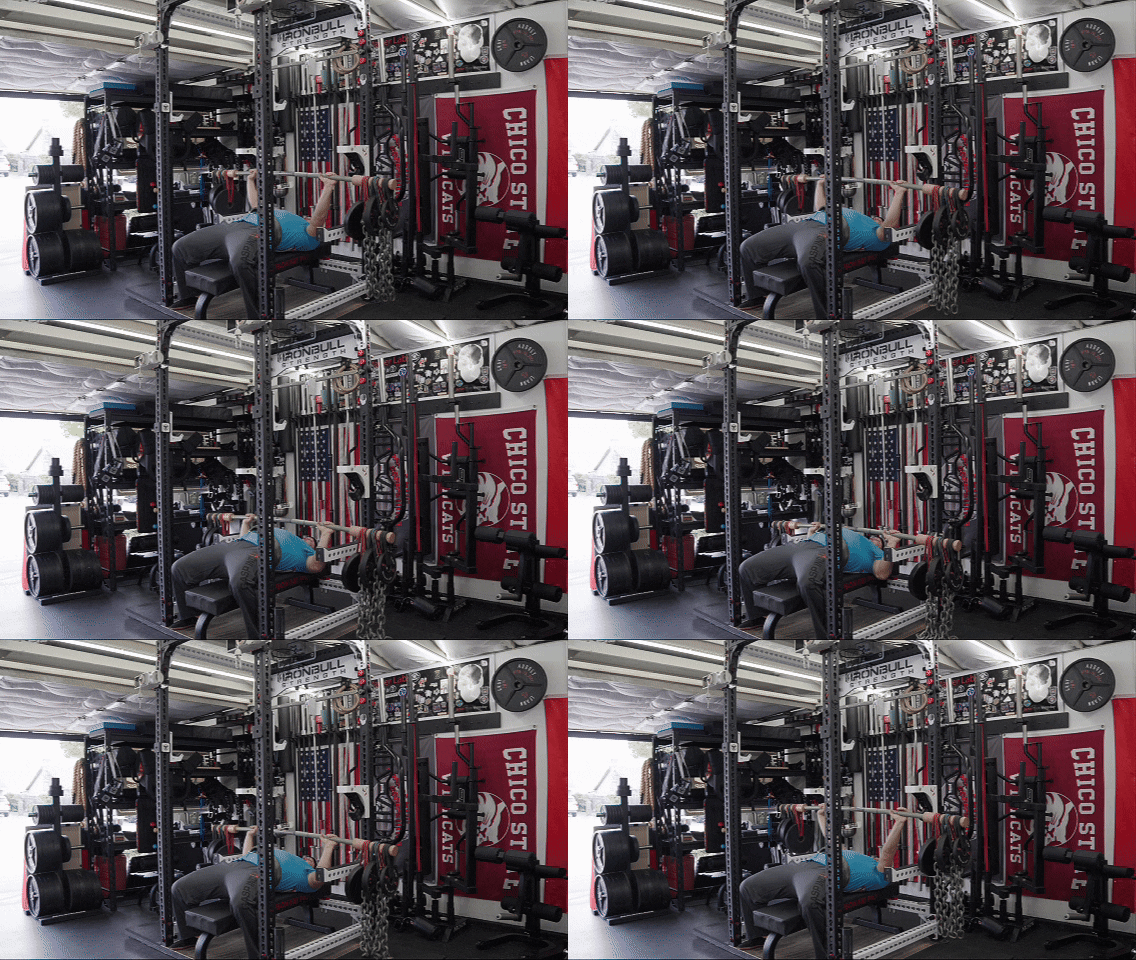
I first saw the Bandbell Earthquake Bar when watching some Westside Barbell videos. They had kettlebells swinging around on bands, hitting 50+ reps in a set and I was equal parts confused and excited. What could this be? Why? I honestly do not understand what I am watching. I start digging and realize they are using a Bandbell bar. Their choice at the time was the original Bandbell bar, but the upgraded model is the Bandbell Earthquake Bar, which is what I bought (later on I’ll note other options as well).
The Bandbell Earthquake Bar is made of composite resins, and resembles a solid PVC pipe. Toss on the end some slotted bamboo like “sleeves” and you have the general makeup of the Bandbell bar. Weighing in at only 6lbs, you can load this bar up with 300lbs and not worry. Well, you CAN load it up with that much, but I’d be shocked at anyone but the strongest of benchers loading it up that much out the gate.
I have had friends come over to lift and if we bench this is almost always the first bar I use with them. The ONLY person who didn’t struggle was a personal trainer who did a lot of gymnastics work, ring work, and other stability stuff. Everyone else? They load up 50lbs and get SMASHED in the chest. They struggle to lift 20% of their 1RM as this bar absolutely terrorizes lifters that aren’t bracing properly from head to toe.
Bandbell Earthquake Bar Specs

- Brand: Bandbell
- Made In USA: Yes
- Length: 80″
- Diameter: 1.5″
- Distance Between Collars: 54″
- Weight: 6lb
- Recommended Weight Capacity: 300lb
Bandbell Earthquake Bar Performance
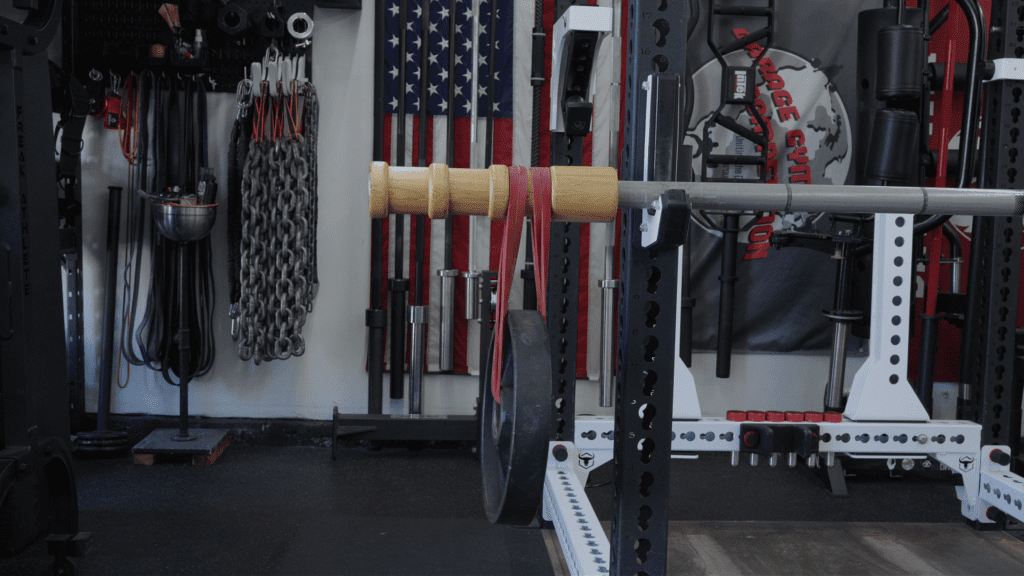
You are going to set the bar up like any other barbell, and then immediately things get weird right after that. The sleeve of the bar does not hold weights, but instead holds bands (or straps). So you are going to hang bands/straps over the sleeve, where the weights hang down below the bar itself. It ends up resembling something like a cambered squat bar. As the bar gets heavier and heavier, it bends in the center, almost like a bow bar. More on these two pieces in a minute.
So on top of purchasing the bar, you are going to need to acquire some straps or bands. I regularly use these straps from Harbor Freight to hang my chains from the Bandbell Earthquake Bar. And I use these bands from Living.Fit to hang my plates and other items. Some people like using uClips to be able to add dumbbells. And there are a bunch of other creative solutions you can try. But bands and straps are my go-to.
Bench

Bench is probably the most common application for the Bandbell Earthquake Bar. And after ten years of use, it my favorite and most consistent use. Bench is an exercise that when performed incorrectly, can easily beat up the shoulders, tear pecs, and ruin bicep ligaments. Having a bar like a Bandbell Earthquake Bar exposes your weaknesses QUICKLY.
This bar isn’t about loading up heavy. It also, in my opinion, isn’t about loading it light. Westside has been known to take it for a ride for 50+ reps. In my experience, this falls squarely into the JUNK VOLUME category of lifting. And at that light of loads, we could use just about anything to get the wobbles in our bench press.
In my experience, you need to be somewhere in the 5 to 10 rep range to get the most out of this bar. It’ll let you focus on high quality reps, require you to maintain your position, and not let you get out of jail free by simply crushing a heavy single. Having to own the bar path, stability, and position of the bar during a repeated effort set is going to reinforce exactly what you want. Perfect control of the bar, every single time.
The way I’m programming the Bandbell Earthquake Bar at this point in my training, is with a slow eccentric, and multiple pauses in the concentric. This is going to require you to maintain your positioning, and PUSH with your chest and triceps to get through the sticking points you just created with the pauses. I like to load up a 25lb plate, then a chain, and repeat that pattern as we go. The chains give you an interesting accommodating resistance experience that really messes up the pauses even further.
This is the kind of bar and set that makes sense to be programmed far away from your competition date. Where you can focus on and address specific sticking points and technique issues, to carry over into your more traditional lifting later on.
I mentioned that the bar has the weight below it, and the bar bends as it gets heavy. This tends to be a fairly shoulder friendly bench press, as it acts like a camber and balances the weight in a beneficial fashion for the joints, and the bend to the bar gives us a beneficial hand placement as well. So lighter loads, focus on technique, with beneficial physics, all plays into a nice bar for benching, even for those with struggles in the shoulder arena.
The Bandbell Earthquake Bar is also a fantastic teaching tool for newer lifters, as you simply can’t cheat this bar. If you get out of the ideal path, you lose it, and the set is over. The same can be said for those who attempt to speed run their sets. So if you have a training partner that likes to
Overhead Press

Nothing challenges the shoulders MORE in terms of stability, than a good overhead press. And the Bandbell Earthquake Bar is going to challenge every last drop of that stability.
I’m not a huge fan of overhead press variations with a typical straight bar. Something funky happens with my shoulders and I just don’t enjoy them. I like multi-grap bar work, and log work, but anything straight is typically out of the picture. But again, something about the way the weights hangs, the bend in the bar, and the required focus on technique and owning positions that seems to work here.
Just like with bench, I like alternating some weight plates and chains, though we don’t get the same accomodating resistance effect here as the chains never touch the ground. I also tend to skip the added pauses, but focus on two things.
First, is a dead-stop at the bottom. I try to make sure that I paused solidly in the bottom position of the rep, to make sure I have to push with the shoulders. Second, is that I hold the top position for a solid pause. That top position can actually be held at the end of each rep for a few seconds, or to make it extra spicy, held at the end of the set as an extra “finisher” like doing a rest a pause technique or something. Having to hold the bar, while it is shaking around, in that top position, when the muscles are taxed, is going to be TOUGH.
Again, overhead press work here isn’t about pushing the heaviest weights with the Bandbell Earthquake Bar. I’m aiming for those 10 rep sets, and typically the weight is a bit lighter than a more traditional bar.
I REALLY like Log Clean and Press, but this is my favorite (dare I say) more traditional standing overhead press variation. It has remained a staple in my routine whenever training this lift, for over a decade.
I’ll add that one more variation here, is to do weighted carries with the Bandbell Earthquake Bar in an overhead press fashion. If you have the ceiling height and space to make this work, it is a very challenging option. Highly recommend it!
Squats and Other Stuff

If you check out their Instagram, you’ll see people squatting, rowing, deadlifting, curling, and much more with the Bandbell Earthquake Bar. I have tried this a number of times, and found it to be useless. It is extremely common for people who sell a product, to want to promote it as doing more than what it is good for. The more something does, the more you might buy it. Unfortunately, I think this is ALMOST stepping into the category of false advertising.
The benefit to this bar is that is shimmy and shakes around. The shoulder joint is a very MOBILE joint by nature, meaning that stability is not its primary purpose. So holding the bar in your hands, and challenging the shoulder to be stable and strong through a range of motion in the bench press and overhead press, is what can help translate to a bigger bench press.
But movements like the Back Squat, have the bar sitting on your back. The most mobile joints involved in the back squat are the ankles and hips (which aren’t as mobile as the shoulders), and those are quite a ways away from the bar load of the bar. This distance seems to make the stability requirements almost non-existent. Add to that, that the Bandbell Earthquake Bar has a max weight rating of 300lbs, and we are looking at a problem for a lot of heavier lifters.
The same thing can be said about the Deadlift, rows, and other exercises. In my 10 years of owning the Bandbell Earthquake Bar, I’ve tried a lot, and nothing but press variations have stuck.
Should You Buy The Bandbell Earthquake Bar?
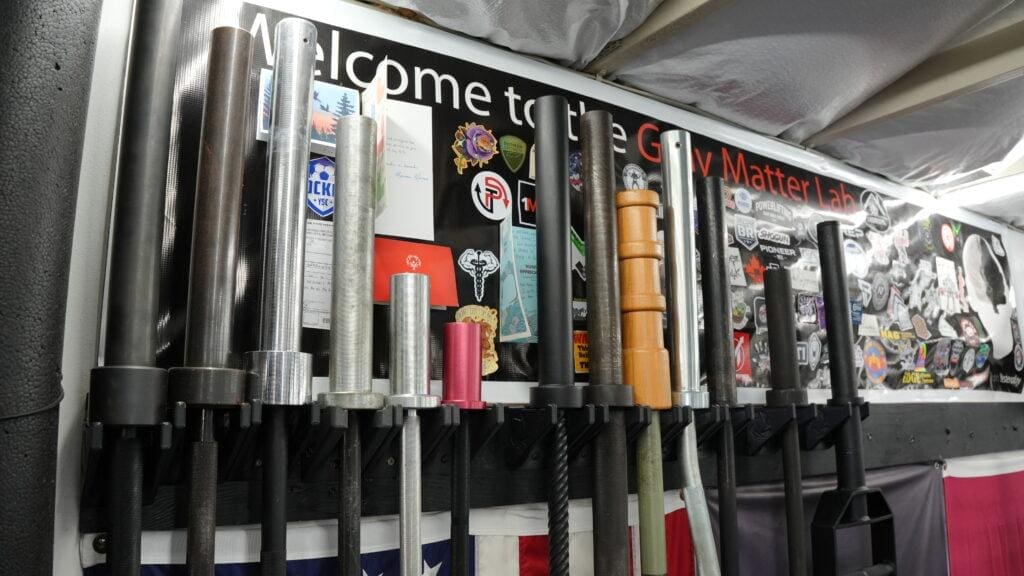
I’ve owned this bar since 2013. It has made every possible appearance in my lifting I can think of. Heavy 1RM bench, high rep bench, zercher carries, and more. My take away at this point is that I really enjoy this bar and I am glad I own it. If you have any glaring issues in your stability, it is going to highlight that IMMEDIATELY. Then it will continue to punish you until you fix them.
I like this bar better for higher rep work than lower rep work. I feel lower rep work tends to miss some of the benefits. And it seems to light up the pecs very well, as that constant need to keep tension really does wonder for those of us chasing the pump.
I like the Bandbell Earthquake Bar for anything that involves the shoulders. I do not like it for squats, deadlifts, rows, curls, and other movements. I’ve tried it over and over again for these movements, and just can not find a benefit. So bench, overhead press, and the overhead weighted carry movements are winners. The rest, skip em.
You are going to need a decent chunk of bands, some straps, some 25lb plates, maybe some chains, and some practice loading and unloading the bar. Once you get your basic rhythm with it, it doesn’t take much longer to load than a traditional bar.
If I was starting a home gym today, this wouldn’t be so high up my list of specialty bars as it originally was. But I would DEFINITELY still grab it eventually. As I look at my programming for the last 6 months and the next 6 months, I have it programmed into the rotation for BOTH Bench and Overhead Presses. I think that says something about the Bandbell Earthquake Bar. Even after acquiring essentially EVERY specialty bar out there, I still use it.
Other Options On The Market

Bandbell makes a number of bars now. Their original bar is a little more work to load than the Earthquake Bar, so I’d take that one out of the equation first. From there, you can decide if you want their RhinoFlex bar, or want to stick with the Earthquake Bar.
The RhinoFlex has a similar concept, but you can load plates in a more traditional fashion. The benefit here, is the ease of use. You also get a higher weight rating. Some of the bars in this lineup even have knurling, are made to IPF specs, and start to look a LOT like a powerbar.
The downside, is that you don’t get that extra movement from the bands and chains oscillating around. You also don’t get the added benefits of the weights being BELOW the bar in your hands, which is a joint friendly option.
I think if you are a big time lifter, or plan to use this a LOT, I would go for the RhinoFlex. For those sprinkling it in like I do, I might still stick with the Earthquake Bar. But you’ll probably be happy with either.
Wrap Up

After 10 years of use, one of the key things I can leave you with on the Earthquake Bandbell Bar is, it isn’t a magic bullet. I have had friends in the home gym community ask me if I recommend it for “fixing shoulder pain” and I typically tell them no. They have asked if it will “end the pain and problems they have while benching” and I typically tell them no.
The Bandbell Earthquake Bar is a bar that challenges you in a different fashion, has some joint friendly properties, and will annihilate any technique, stability, and positioning problems. But if you are in pain RIGHT NOW, it probably will make that worse. Adding instability to an already unstable pressing pattern, is a recipe for more pain and discomfort. If you use this bar and don’t know how to identify, feel, and fix your pressing problems, it is like getting an email in a foreign language. You simply won’t be able to make the adjustments needed to fine tune your problems.
The Bandbell Earthquake Bar is really cool. But it isn’t a magic barbell that will fix you in one go. Properly using it, understanding what it does, how it works, and leveraging that to chase down your new 1 Rep Max is a process in itself. So consider your abilities to do so, before adding it to your barbell lineup.
You can grab a Bandbell Earthquake Bar from this link.

Joe Gray
My name is Joe Gray - aka Gray Matter Lifting - and I've been lifting at home since 2013. In that time I've built a badass gym, deadlifted over 600lbs, helped grow r/Homegym to over 1 Million subscribers, created the Garage Gym Competition and written a ton of posts here on this site. I love the Garage Gym Community... If you do too, I hope you stick around.