How To Buy A Power Rack For Your Home Gym In 2026
Last updated on August 12th, 2026 at 02:41 pm
I built my garage gym back in 2013. Power Racks came in black, in one shape and design, from about two different companies. That was it. The decision was easy… I bought a Rogue R3 and never even questioned my decision.
But today, racks come in multiple tubing sizes, hardware sizes, shapes, builds, colors, from every manufacturer. There are hundreds from Rogue alone. A power rack is likely the center piece of your garage gym. You will squat in it, bench in it, maybe even deadlift in it. You’ll want to do most of your accessories like rows, overhead press, and more from it. You’ll buy accessories for it like dip attachments and safeties, and maybe even a cable set up. This is a piece you want to buy once, and hopefully never need to upgrade or change.
So today we are going to take the absurdly difficult world of power racks and demystify them by making a few key decisions, so you can buy the right power rack for your home gym.
Key Notes
The Best Power Rack For YOUR Home Gym is different than mine. A little research and thought will help you pick the right one.
Links throughout may include Affiliate Links. These help fund the site at no expense to you.
Power Rack FAQs
What is a TRUE 3×3 rack?
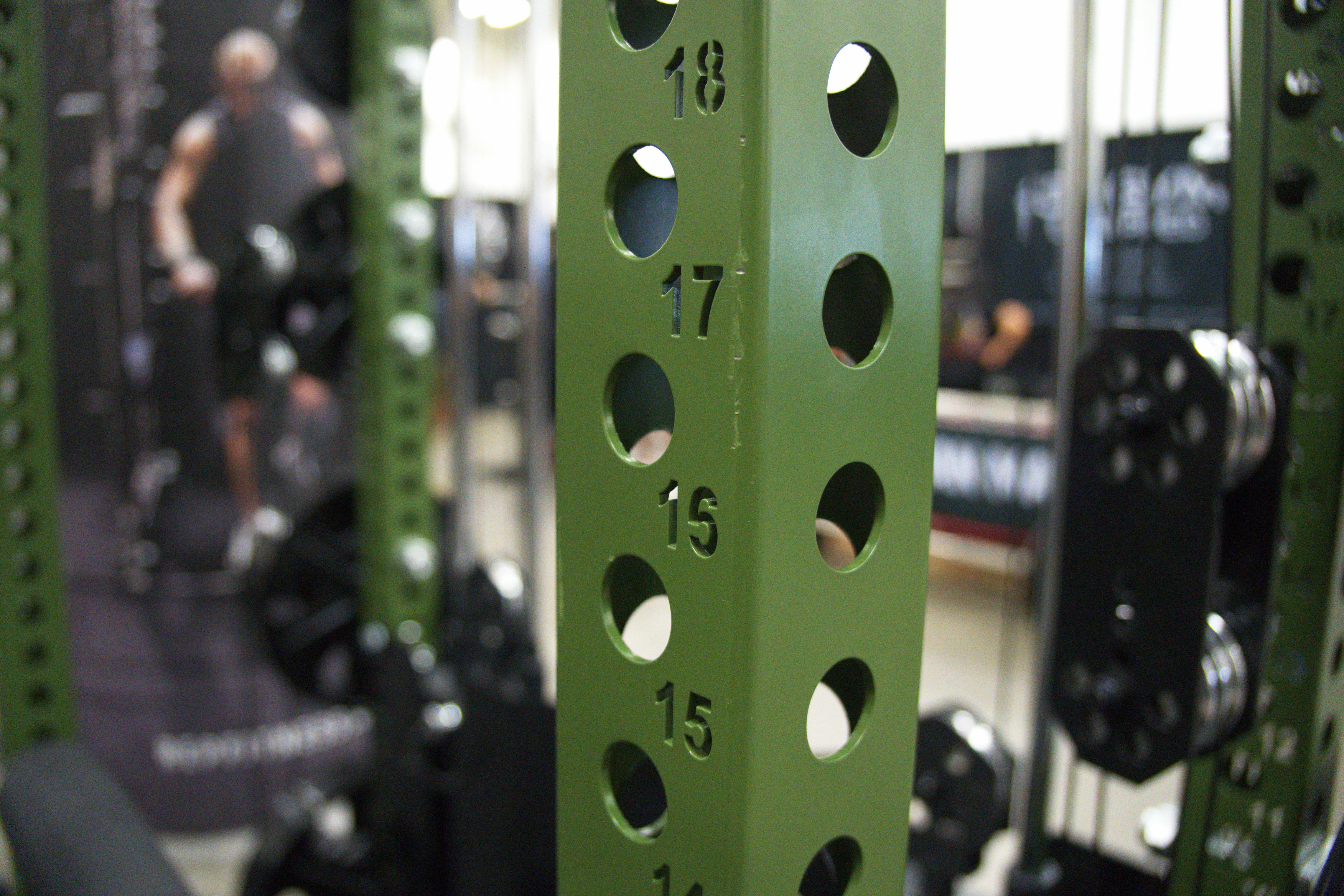
Some racks are TRUE 3×3 and others are METRIC 3×3, which means they round up. Racks that are imported from outside the US are typically metric. This matters with some attachments so they aren’t super shaky.
What is a power rack?
A power rack is a piece of gym equipment meant primarily to help you lift safely. The main exercises are bench, squats, and other barbell related exercises.
If you train alone, it’s one of the most important safety investments you can make.
How much space do I need for a power rack?
A typical rack takes up around 4 feet wide, and up to 4 feet of depth. But you need to factor in your barbell as well as loading that bar. So I would recommend 8 feet of space at minimum on the width end.
Don’t forget to measure your rack height and your ceiling height.
What attachments are worth getting?
Your rack should come with J-Cups, which hold your barbel, as well as some kind of spotter arms, safety pins, or straps for catching missed lifts.
From there you can add pull-up bars, plate storage, cable machines, dip bars, landmines, and more.
Do I need to bolt my rack to the floor?
Lighter racks will need to be bolted down if they do not have weight storage or some kind of weight from a cable machine to hold it down. If you rack a few hundred pounds and slam into the rack, it could topple over.
You can bolt to a platform or the floor. Heavier racks, especially with weight storage and more additions, don’t require this.
What’s a good budget for a power rack?
Expect to spend at least a few hundred bucks. I would personally recommend $500+ for a starter rack for most people, and upwards of $1,000 for those looking for everything.
Are all attachments compatible between brands?
No—not even close. Your tube size and your hardware size matters.
What should I prioritize when choosing a rack?
Safety first. If it can hold and support and save you from missed lifts, then we are off to a good start. Then make sure it fits in your space, fits your budget, and has the ability to include attachments that you want.
We Need To Make a Couple Decisions First
Since not every home gym is the same, from budget, to space, to lifting goals, I want to make sure we start in the right place first. And that is figuring out what we want to accomplish with our rack. Let me start off by telling you about what I want out of my rack.
The most important thing for me is that I need the ability to safely Squat, Bench, and Deadlift HEAVY weights with multiple bar types, from inside the rack. No amount of cool rack attachments, features, cables, trolleys, or doohickeys will ever supersede that need for me. If I can’t squat 500lb+ safely inside that rack, it isn’t doing its primary job.
From there I want my rack to help build out my home gym with accessory movements. I do a tremendous amount of my accessory work with cable machines, especially with my ever growing collection of cable attachments, so that is high on my list. Replacing large machines where applicable, like a Dip Station, or Smith Machine, or preacher curl machine is another piece to the puzzle.
And third, I do actually care what my rack looks like. So I want to be able to keep some kind of aesthetic flow between my rack, the attachments, and the rest of my gym.

But remember that goal number 2 and 3 can not interfere with goal number 1. The coolest looking rack with all the bells and whistles that get in the way of me lifting heavy is a no go. You might notice I didn’t mention storage for my plates or bars. I didn’t mention a belt squat. I also didn’t mention pull up bars, grips, wall ball targets, punching bags, rings, ropes, etc.
I have my priorities, but you need to figure out YOURS.
Do you want your rack to be like mine? Maybe you want it to be completely barebones and just lift heavy in and on and around it? Maybe you don’t even care about your rack handling heavy weights, you just want to toss a ton of attachments on it and let it ride. Or maybe you want it to do EVERYTHING possible. All viable options. But this is our first decision.
What do you want to accomplish with your power rack?
We are going to use this decision to determine what rack we should buy. So before you proceed think about your space, your budget, what kind of equipment owner you plan to be, and your lifting goals.
Types of Racks
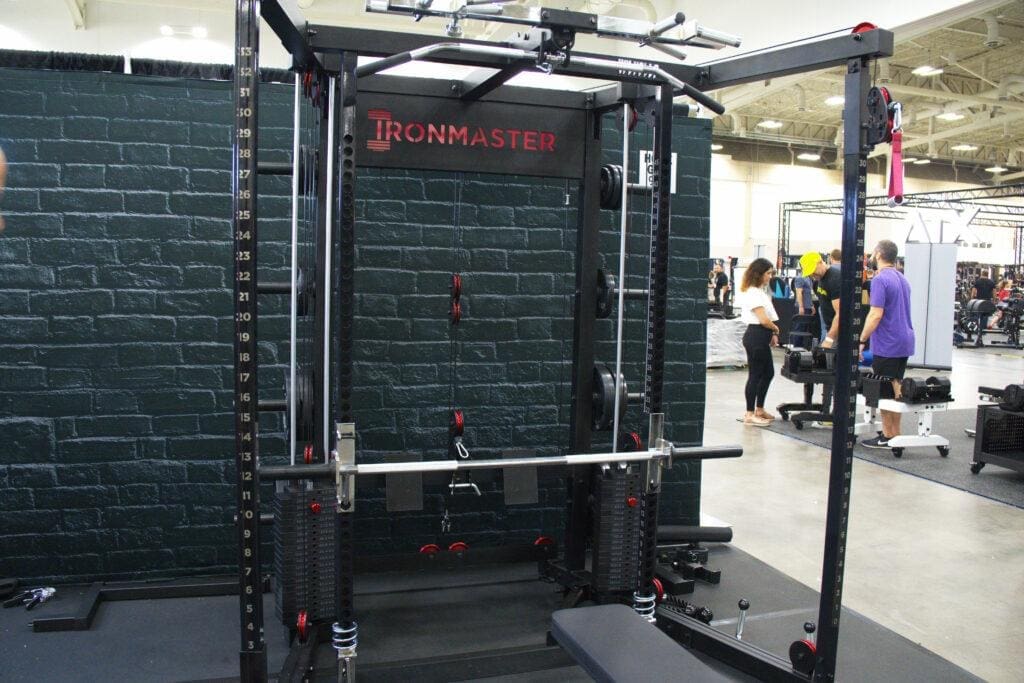
Based on the above, we get to narrow down the type of rack we want. Our first segmentation is between what we will call Universal Racks and One Off Racks.
One Off Racks
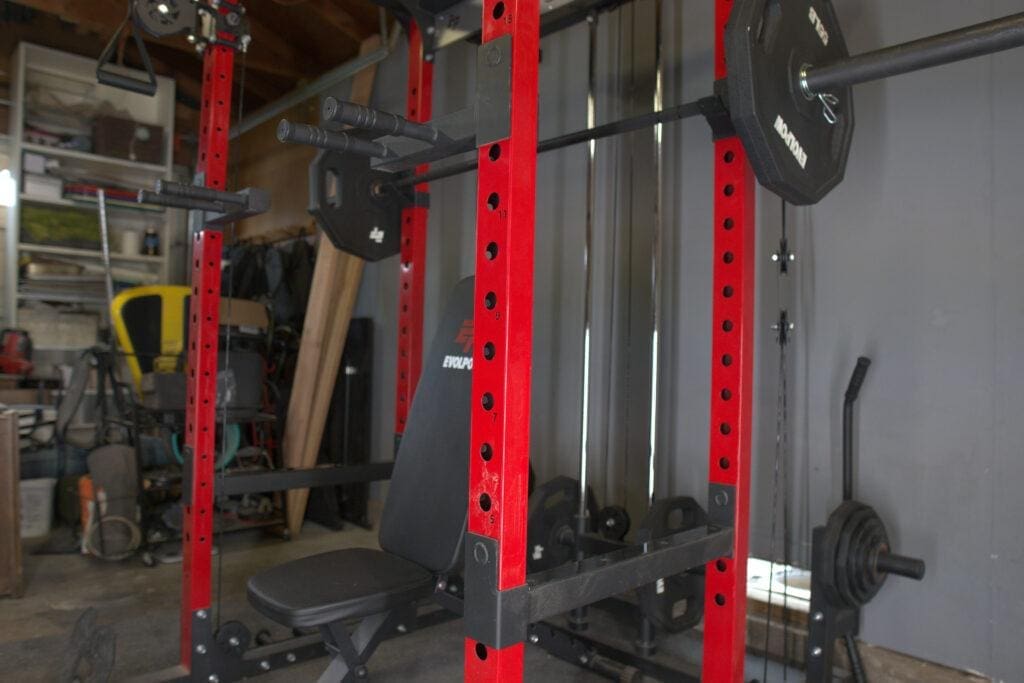
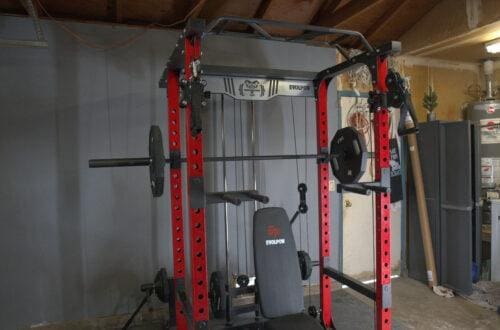
If your rack looks like the rack pictured above, it is only going to be compatible with attachments by the manufacturer for that specific rack. This is because the size and shape of the tubing itself, and the hardware (nuts and bolts) don’t fall into line with the more universal rack types (which we will talk about in a second).
Now before you rule these racks out entirely… This EVOLPOW rack has an adjustable cable system on both uprights, it has jcups and safeties. It has an attached dip handle. It has a built in landmine, low row footplate, multi grip pull up bar, it came with cable attachments and storage, barbell storage, weight storage, and a few more doodads. And it costs around $600. That is less than I paid for my rack on its own over 10 years ago.
So this rack already does a ton of things. It might not be the best at everything, and you’ll be limited by future additions, but an all in one rack like this might be the perfect solution for you and you’ll never want/need anything else. These types of racks are offered by a lot of companies, and you can even find some on Amazon. The EVOLPOW one pictured is currently in my brother in laws garage, and is serving him well.
Universal Racks

If you want a more “universal” rack, something that will allow you to add a lot more attachments, from a bunch of different manufacturers, build out your rack to your exact specs and desires, it will come in one of 3 designs:
- 2×3 w/ 5/8″ hardware/holes
- 3×3 w/ 5/8″ hardware/holes
- 3×3 w/ 1″ hardware/holes
Attachments made for 2×3 will almost never fit 3×3 racks. But attachments made for 3×3 COULD be adjusted to fit 2×3 racks with some shims. In a similar fashion, 1″ hardware attachments can never fit 5/8″ hardware racks. But you could buy 5/8″ attachments, add a spacer from FandF steel, and make it fit 1″ hole racks.
2×3 racks are mostly being phased out. Attachments for them are harder to find, and almost impossible to find from smaller shops. If you want anything beyond the basics of attachments, I’d skip a 2×3 rack. Keep in mind that I squatted 550lbs in my 2×3 rack and it was my everyday rack for over 10 years. So these aren’t weak, they just aren’t the industry standard anymore. So you can get them for cheaper, but you forgo attachment options. Totally up to you.
3×3 w/ 5/8″ rack attachments are likely to be cheaper due to the smaller hardware than their 1″ counterparts. But there are also a number of offerings that only come in 1″. On top of that, the 1″ options are typically a bit more premium in their design and aesthetics. And… Here is the kicker… As mentioned above, if you buy a 1″ rack and want a 5/8″ attachment for whatever reason, you can always add the spacer and get the job done.
So 1″ hardware racks give you access to more attachments, that are typically more premium in their design and function, and gives you access to 5/8″ attachments if you want. For this reason the 1″ hardware racks are typically the gold standard for the home gym enthusiast who wants to avoid FOMO.
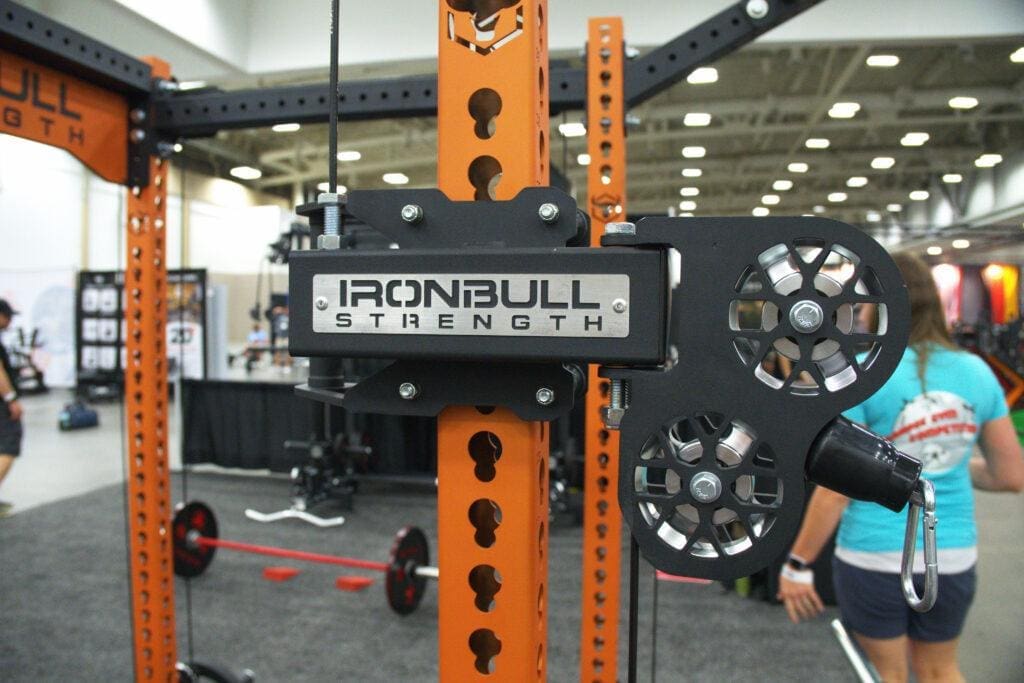
There is one additional option I didn’t include above, which is a hybrid between the two 3×3 options, and it comes from IronBull Strength and is my current rack. They call these the Frankenstein Uprights that have BOTH 5/8 and 1″ holes by means of using keyholes. This means that without an adapter you can use any attachments. It also means a few other things which I detail in the article, if this is looking like a good solution for you.
So this is our second decision, what type of rack do you think you want?
If you more or less understand the above, but want a quick recommendation on details…
- if you want a rack that does a ton, in a small space, on a tight budget, you go with an all in one
- if you want a rack that does nothing fancy but supports your heavy lifting goals, snag a 2×3 rack
- 3×3 5/8″ hardware gets you MOST of the way there, and can be a budget option between barebones and top of the line
- If you want it all, with no compromises, and no fear of missing out, I’d go with the 3×3 1″ or the IronBull Frankenstein concept
There are a few benefits to the 5/8″ 3×3, but I think it you want/need those you should go with the Frankenstein option like I did.
Rack Configuration
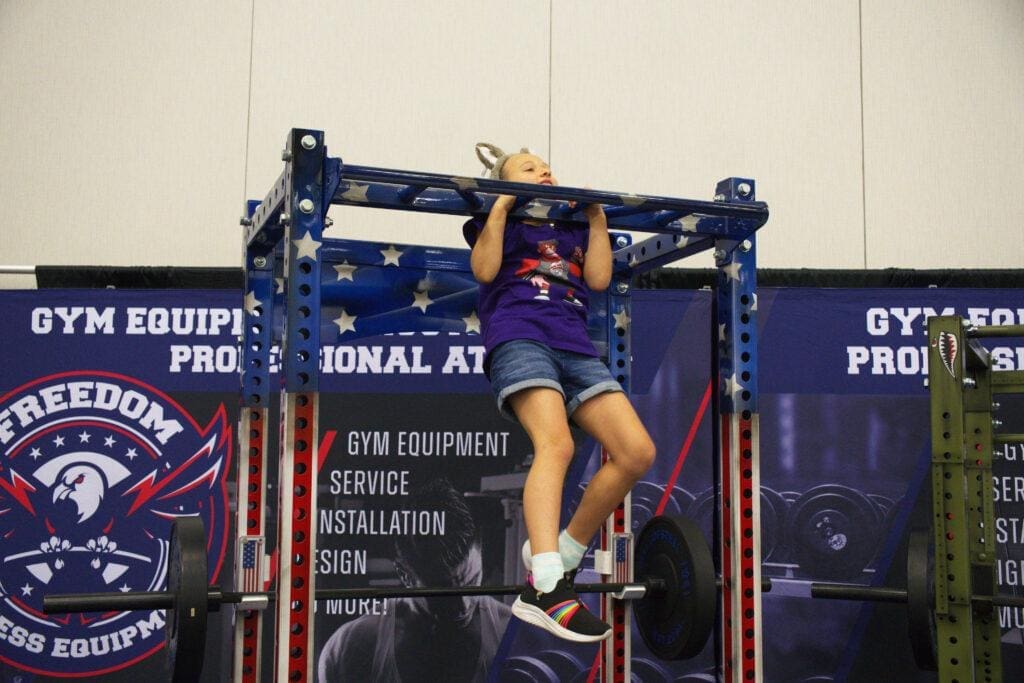
Ok, from here we need to make one more decision. And this is around the basic configuration of the power rack. What I’m talking about is how the uprights are set up, how many we have, and the general configuration of all of that.
The three most common configurations are a Half Rack, a 4 Post Rack, and a 6 Post Rack
Half Rack

This is where you are going to use the back posts for storing weights, and the front posts to lift off of. A half rack takes up the least amount of space, but you also need to lift out front of your rack, instead of inside of it. For me personally this is a no go. I’m not gonna hit a 500lb squat by myself out front of my rack. But for you, this might be ideal for the space saving and your general lifting needs.
4 Post Rack

Both of the racks I have owned have been 4 post racks. This is likely the most common configuration for a home gym, due to the ability to lift safely inside the rack, use the outside for attachments, and not take up any extra space. You are likely going to need to grab a weight rack of some kind, and a 4 Post Rack needs to be either weighed down or bolted into a platform or the floor.
6 Post Rack
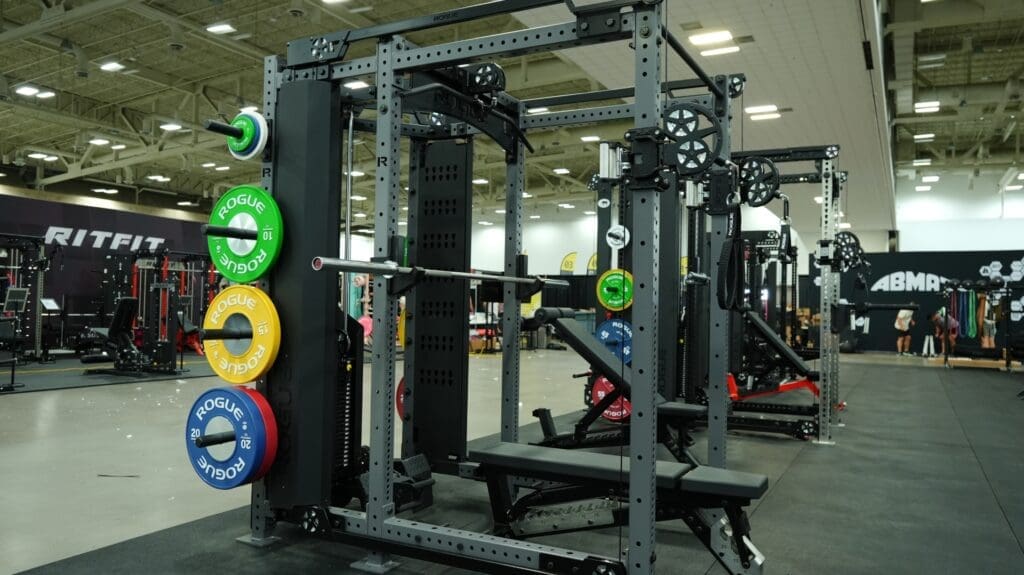
This is the big daddy option of power racks. You get the full functionality of the 4 post rack, but with additional storage for your weights. If you get really creative you can also use the inside section for some additional attachments like a belt squat. Plus with the weight storage, the rack doesn’t need to be bolted down anymore.
Between the three, your decision is going to be based on the amount of space you have to dedicate to your rack and additional storage. The half rack wins for space saving, the 4 post gives you more lifting security but you lose the weight storage, and a 6 post gives you both but takes up a lot more room.
If you can fit it, the 6 post is going to give you everything and a ton of opportunities into the future. If you aren’t planning to go super heavy, if you lift with bumpers, and you need every square inch of your space, go with the half rack. If you lift heavy but don’t have the space, grab the 4 post.
I have owned 4 posts because of the layout of my garage. If I had the space, I’d take a 6 post without a doubt.
Other Things To Consider

You need to be realistic about your goals and intentions. I lift in the 500+lb range, so I need a rack that can tackle that. The EVOLPOW rack I mentioned earlier, does not have the weight ratings to support my lifting. But you might not be chasing down the same goals. Pay attention to weight ratings, stability, and useability.
A rack with a lot of stuff built into it can be cool, but you likely can’t squat off a rack, while doing lat pulldowns off the same rack, while doing smith machine presses off that same rack, while doing pull-ups off that rack. There is only so much space.
So think through your own use, your space, your goals, how many people will be lifting at once, if you like to superset or not, and more. These aren’t things I can answer for you.
The Best Power Racks For A Home Gym
We should now know what kind of rack type, the size/hardware, and the overall construction we want for our rack. Meaning that we are ready to buy a rack. Based on the above, choose the right section below.
The Best All In One Power Racks
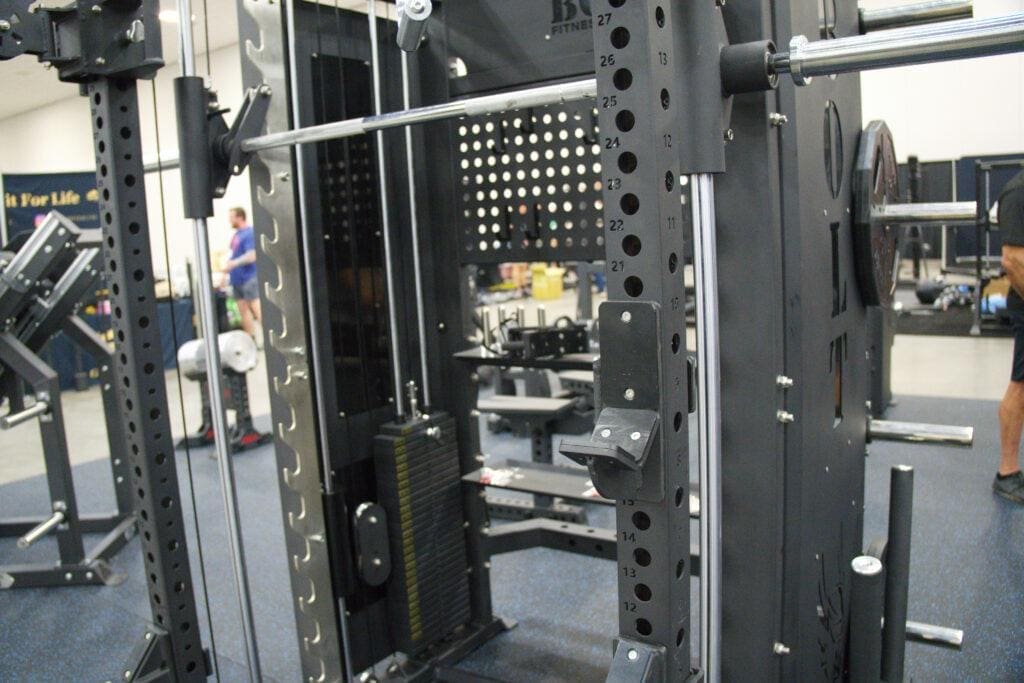
Key note as we begin here, this list is going to change possibly every month. These seem to be a hot ticket item right now.
If I am going all out in this category, I’d look at a few options:
- Rogue FM-6 Twin Functional Trainer – You’ll get a BEAST of a rack, with a lot going on, and top of the line Rogue quality
- Prime Prodigy HLP Selectorized Rack – Prime was one of the first to make this type of rack available to the masses. And their rack is a FANTASTIC option.
- REP ARES 2.0 – REP makes some of the BEST racks out there, and their ARES is a monster.
- ForceUSA C20 – This might be my number one option if I was choosing for myself. Smith machine, cables everywhere, fully functional rack, pivot arms, and more.
If you wanted to go a bit more budget, check out my friends at EVOLPOW or MAXUM Fitness.
The Best 2×3 Power Racks

The Rogue R3 is the rack I used for a decade, and it is still one of the most affordable and American Made racks on the market for those looking at a rack as a place to lift heavy and not much else. Other companies offer cheaper options, but I’m going R3 all day every day for this category.
The Best 3×3 and 1″ Power Racks

I think the best basic rack in this category, is the REP PR-5000. You can add a smith machine and a ton more, and build this out from barebones beast to every bell and whistle.
Rogue’s Monster Line kind of defined this category. So they are worth a look for the American Made Power Rack option.
If you want to go my route, the IronBull Strength Frankenstein Rack has been serving us exceptionally well. And IronBull is building out more and more accessories, attachments, and refinements for their pieces.
Wrap Up
There are an ABSURD amount of power racks available. I can’t possibly cover all of them in this article. Bells of Steel, Oak Club, ATX, Body Solid, Powertec, Surplus Strength, and many MANY more make suitable racks for the home gym.
So my goal was more to help send you in a direction. Give you the things to think about, so you can make an informed decision. So don’t look at the above recommendations as an end all list. If you find a rack you like, from a company you approve of, and it fits your budget, your space, and your needs, then get it!
The most important things… It helps you lift safely. And it helps you CONSISTENTLY lift today, and forever.
If you ever want to run a power rack buying decision past me, feel free to drop me a line. I would be more than happy to help. Good luck!

Joe Gray
My name is Joe Gray - aka Gray Matter Lifting - and I've been lifting at home since 2013. In that time I've built a badass gym, deadlifted over 600lbs, helped grow r/Homegym to over 1 Million subscribers, created the Garage Gym Competition and written a ton of posts here on this site. I love the Garage Gym Community... If you do too, I hope you stick around.