ForceUSA Tandem Tower Review – Best Cable Tower in 2026?
Last updated on July 9th, 2026 at 11:44 am
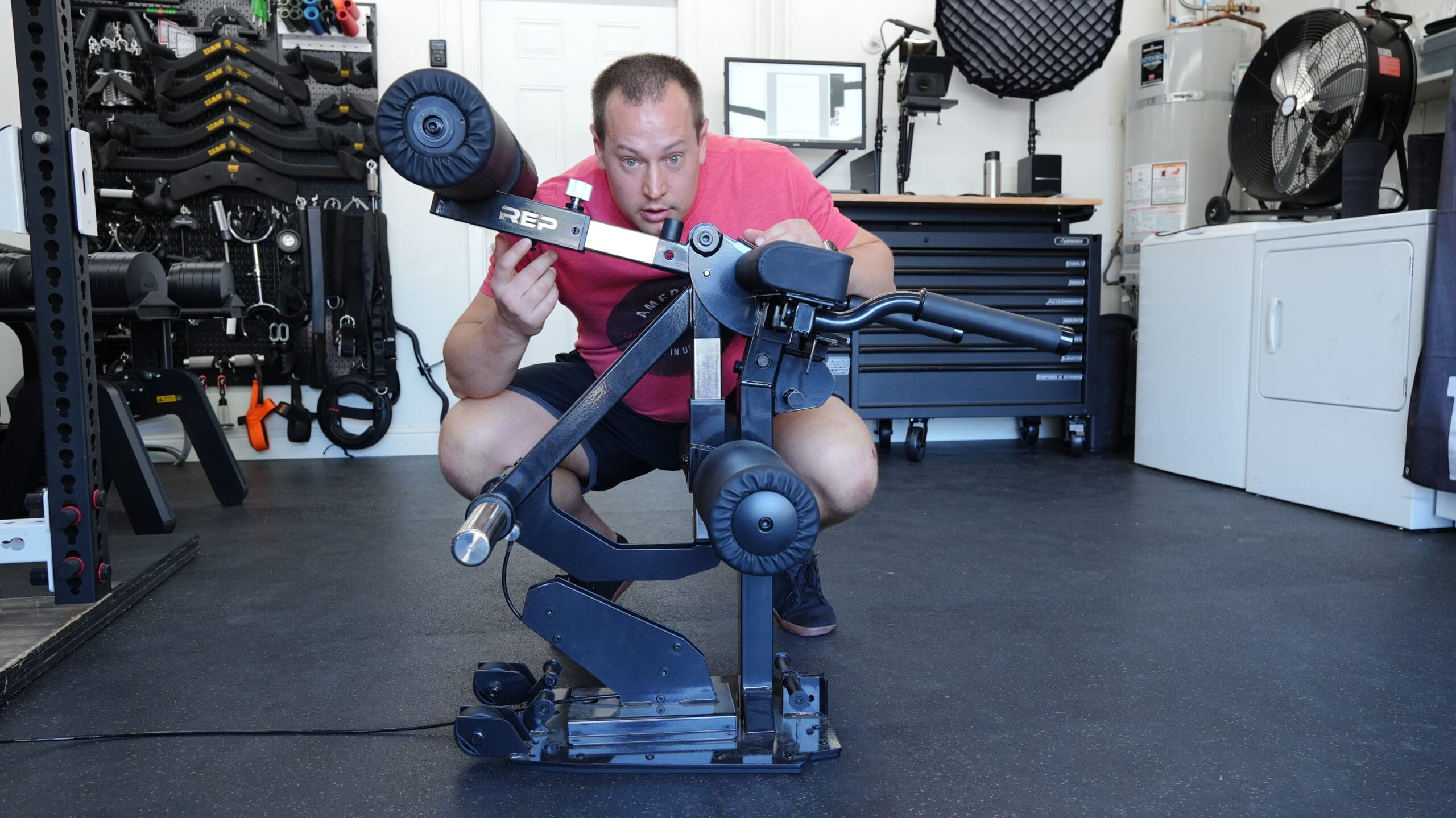
We’ve been making some big changes in the garage lately. With our rack upgrade and joining the 3×3 crew, we wanted to move away from the Inspire FT2 and towards something that would share the same 3×3 and 1″ hole framework. There were a few options on the list, but what ended up catching my eye the most was the ForceUSA Tandem Tower.
It arrived in December of 2025, we assembled it, and have been banging it around with me, my wife, my daughter, friends and more, to see what we think. Today after 6 months of consistent use, we are sharing our thoughts on the ForceUSA Tandem Tower.

Transparency Note
ForceUSA sent over the the Tandem Tower for free for sake of testing and review. I also have an affiliate link and discount code that will save you some cash and give me a small kick back. These funds help me maintain this site, produce videos on YouTube, and do everything I do in the home gym community. I appreciate your support.
ForceUSA Tandem Tower Overview

Go back just to 2024, and the cable game looks a lot different for home gym owners. We often had to choose between a functional trainer or a lat pulldown and low row cable tower. Some units like the Inspire FT2 managed to combine these into one, but you had other tradeoffs including price and size.
In late 2024 we had the introduction of the swivel arms, which started to make their way into a lot of cable machine designs. They give us the ability to address a lot of the problems of traditional cable towers, expand our functional trainer options, and in the case of options like the ForceUSA Tandem Tower, do it all in a smaller footprint.
ForceUSA Tandem Tower Specs
- Brand: ForceUSA
- Made In USA: No
- Dimensions: 53 in (W) × 58.5 in (D) × 87 in (H)
- Recommended Weight Capacity: tested to 2000 lb
- Weight Stack: 200 to 250lbs
- Cables: 6.2mm nylon-coated mil-spec aircraft quality cables
- Weight: 718 lb
- Warranty: Lifetime (Frame), 10 years (Moving Parts), 1 year (Upholstery & Attachments)
- Return Window: Check the details.
- Assembly: 1+ Hours
ForceUSA Tandem Tower FAQ

What is the minimum ceiling height needed?
It measures at 87″ tall, but you likely need a few inches of clearance for assembly and safe use.
Does it need to be bolted down?
No. It comes with two different stability options. Bolting to the floor, or using the wider base. Bolting is more work, but creates the BEST stability solution, and takes up less space.
Shipping & Assembly

The ForceUSA Tandem Tower gets shipped in a couple pieces. The weight stack comes in one box, with a small cardboard box for the weight stack upgrade, and then the above crate for everything else. These get delivered by freight.
We ran into a couple issues with shipping. First was that the company gave us a Monday delivery date, and then delivered on Tuesday. They showed up and ONLY had the weight stack crate and the weight stack upgrade box. One of the plates was loose on the pallet. We found out later that two plates were loose, because during assembly I was missing a plate. The full crate got delivered a week later, with zero communication from the shipping company. I came home from an activity with my daughter to find it outside on my front driveway. Luckily it wasn’t raining.

Assembly is pretty well done, as ForceUSA individually wraps all the pieces and even labels them with the Step number. The hardware is all individually packed and put into plastic containers. And the instructions all match up with detailed info. It took awhile to complete the installation, and I needed a hammer which they didn’t mention, but overall this was fairly straight forward.
The only other piece to note, is that the weight stacks were labelled incorrectly. I had a number of duplicates and I was missing a handful of the larger numbers. This won’t matter in the long run for me because I’m planning a custom solution, but this could be frustrating for those not going that far.
ForceUSA Tandem Tower Features

The ForceUSA Tandem Tower is a MOSTLY straight forward cable tower. We have aluminum pulleys throughout, which SHOULD help with a smooth operation. We have a black powder coat throughout the entire machine. It is fairly well applied and looks professional. There are a few holes that have some rough spots, we’ll see if this makes a difference or not in use.
It comes standard with a 200lb weight stack, but we opted for the weight stack upgrade to bring us up to 250lbs. This operates in a 1:2 ratio, meaning that each individual cable arm cuts the weight in half. So each 10lb plate is only 5lb of felt weight. For larger movements like seated rows and pulldowns, you can use the included 2 to 1 cable attachment to connect both arms together for a true 1:1 ratio. So we have 250lbs of weight to work with.
On top of that we can leverage the band pegs to add more weight. This will be a mixed bag because SOME exercises really do not benefit from a band, where others definitely do. I’ve also got my GymPins to stack extra plates, performance pins for some drop set fun, and other cable machine accessories to tinker with.

The ForceUSA Tandem Tower comes with a lowrow footplate that can be adjusted in a few different positions, as well as removed entirely and stored on the back of the machine. Speaking of storage, it also comes with several pegs for storing carabiners, the 2to1 connector, chains, and other accessories.
Because the uprights on the machine are 3×3 with 1″ hardware/holes, we also can use other creative solutions for more storage. We can store rack attachments like a REP Pegasus or Oak Club KLO here. We can add weight pins to store things like micro plates. Or use cross members and uprights to create weight storage and more.

The real creative solution for the ForceUSA Tandem Tower however, comes by means of the dual swivel arms on the dual uprights. Swivel arms give us the opportunity to mimic something like a functional trainer and place the arms at varying points, angles, and heights. They also give us the ability to combine the arms together more easily than traditional trolleys. And with the dual uprights, each swivel arm is on its own trolley and upright, meaning you can independently place the left arm at the bottom for curls and the right at the top for triceps extensions. You can superset with two different cable attachments. Or combine in a number of fashions.
Other Notes

The ForceUSA Tandem Tower comes with an assortment of cable attachments as well. It also has some straight up gorgeous finishing touches in the way of knurled knobs, stainless pop pins, and fully welded end caps. From an aesthetic stance, this piece is very well done, and if you are starting out from scratch, they’ve hooked you up with a good assortment of accessories and attachments.
ForceUSA Tandem Tower Performance

The high level here, is that we have an overall quality piece that gets the job done. But it has some hiccups in a number of fashions that have changed the opinions of a few of our athletes over the past 6 months. The ForceUSA Tandem Tower works, but we didn’t hit a home run here. Lets dig in.
Articulating Arms

These have become a staple with just about any cable solution in the past year or two. Force’s offering is pretty on point with what we can get from others, as we get 4 vertical adjustments and 5 horizontal adjustments for each. The vertical adjustments let us get a maximum pulley height of 85” off the ground… if we use the 2n1 adapter, we are sitting at about 80” off the ground depending on what carabiners you use. We can also drop it down literally on the ground, to give us some great options for curls, leg work, and other options.
I found that TYPICALLY we were using either the straight orientation, or the out wide orientation. So the various other horizontal options probably aren’t going to be in heavy use.
The biggest question everyone has asked, is about the width, specifically if the ForceUSA Tandem Tower is wide enough for cable flyes like from a traditional functional trainer. That answer is, kind of. Personally, I’m not a huge fan of a really wide flye, I actually prefer them to be a bit tighter to my body.
So for me, the answer is yes. Seated works, standing in a press as well as flye press-down style, all work. But if you like a really wide cable, you can get much wider on a typical rack cable set-up or functional trainer.

Where the ForceUSA Tandem Tower starts to create some uniqueness in their articulating arms, is with the lock-out pop pin. It sounds cool on paper, but I’ve probably used it twice, and it more often just gets in the way of locking the pin when I want it to. If you do a lot of “athletic” movements where you are moving in a really dynamic fashion, this might be an added feature. For the rest of us just trying to lift some weights, I think it is a little more of a bug, than a feature.
Trolleys

The ForceUSA Tandem Tower trolleys run up and down the front uprights independently, which is the primary difference between this and something like the Get RxD Phoenix Tower. Your use case here is going to differ based on your space and workouts.
When I’m lifting by myself in our garage, I don’t often use the two trolleys at different heights, because I’ve also got two VOLTRAs. But when I’ve forced myself to ONLY acknowledge the Tandem Tower, it has come in handy for some supersets on arm day. Since we are working with a single stack, opposed to something like our old Inspire FT2, any supersets that aren’t using the same weight, are going to require you to make adjustments to the weight on every set.

The other potential big win with the independent trolleys, is on how much lighter they are than a single system like the Get RxD Phoenix Tower. Now, these aren’t easy to lift. This is still a two-arm operation even for me as the weight is out front which creates drag on the upright. But we essentially cut the weight in half, so even if we plan to set up at the same height, it can be a lot easier for smaller athletes. However, Get RxD did just release a counter balance upgrade for their Phoenix Tower, so if you are not liking the dual uprights, but want the ease of use, that might have you covered.
Cable Function

Over the past 6 months, after an initial lubing of the guide rods, I’d say the cable travel is as smooth as you are going to get on most cable machines. There are two items to keep in mind with the cables on the ForceUSA Tandem Tower though.
I found it common for the cable to track off the pulley itself. This is likely a downside of the articulating arm design in general, but it is a cause for concern for longevity. If that cable travels outside the pulleys and drags on some heavy sets, after time, you’ll be replacing the cable. So you need to be cautious of your set up here and make sure it all lines up appropriately.
The other issue is around the travel length of the cable. You have more than enough for any single arm or single leg activity. But when we get into iso lateral stuff like flyes, since we are working with a single stack, using both at the same time cuts our total cable travel in half. You aren’t likely to run into issues with MOST exercises, but some long range of motion movements like front facing lateral raises will be a problem.
Uprights

The ForceUSA Tandem Tower uprights are one of the biggest selling points of this system. Our old Inspire FT2 wasn’t compatible with any of our fun attachments and toys, but this fits in nicely alongside our rack. We’ve got the numbered holes on the uprights, which is great as the trolleys have cut-outs so we can dial in a matching setting easily on both trolleys.
After several months; the trolleys are leaving marks on the uprights though. I’m not against my equipment having some battle wounds, but this is probably a spot where it shouldn’t happen.
The back upright being the same 3×3 and 1” holes is a nice touch, as we’ve been able to use it for storage of all kinds of stuff. I’ve seen some gyms where people have built off of this piece with crossmembers and uprights and created plate storage, bar storage, and other goodies. This compatibility is the huge win for the industry standard upright and hardware sizing. Unfortunately, it isn’t as impactful as my gut thought out the gate.
If you look at the Phoenix Tower, with one upright, you can use any rack seat, Dip station, or other rack attachment and be nice and centered. With the Tandem Tower, if you put those on your rack, you are sitting off center.
Now, because of the articulating arms, you CAN make this work, its just a little finicky and funky and it’ll definitely drive my OCD friends crazy, but it technically works. But both systems, outside of some storage and a couple of rack attachments, probably aren’t going much further.
You aren’t adding Jammer Arms, J Cups, Safeties, or really anything else here from a rack attachment perspective, so the uprights fitting industry standards aren’t expanding our opportunities as greatly as joining that 3×3 1” crew rack club does. All in, the front uprights being 3×3 with 1” holes doesn’t seem to add much to the ForceUSA Tandem Tower, except of course costing more.
Accessories & Attachments

Remember when I said the ForceUSA Tandem Tower had attachments off center? Well, Force released a solution for that, the Tandem Tower Center Connector which connects into their Swivel Lat Seat. This piece connects in between the two uprights, which gives us a docking station of sorts for the Swivel Seat to attach on center to the Tandem Tower.
This piece fits VERY snug, and takes some effort to dial in the right location. You have to then feed the two posts through appropriately, and secure them in place. When you are done here, you have to take the entire thing off, because the trolleys can’t navigate past them on the uprights. So every time you want to do pulldowns, it is a fun exercise to get rolling. There is also, no real storage solution for this. So mine has just been sitting alongside my Tandem Tower when not in use, alongside the swivel seat.

And the kicker, the seat with their included lat bar, 2n1 adapter, and carabiners, doesn’t give me a full stretch without leaning back on lat pulldowns. If you are much over 6ft, this is gonna be a bummer for you. It works, but this feels like a situation where they released the Tandem Tower, customers asked how to do Lat Pulldowns, which they hadn’t thought of, and they quickly came up with a solution.
The ForceUSA Tandem Tower also doesn’t truly fit against a wall or back into a corner like I had originally imagined, especially when we factor in storage off the back upright. In a similar view, this thing has a fairly wide footprint. If we look again at the Get RxD Phoenix Tower, that is in a T shape that sits relatively flat against the wall. The ForceUSA Tandem Tower is huge v shape that eats up a bunch of floor space.
The win here, is that this shape doesn’t require any additional weight to hold it down, while the Phoenix Tower design claims you should add weight posts and weights to hold it down. But if we compare the measurements of the Tandem Tower to Force’s own Functional Trainer, the Functional Trainer actually clocks in at 4inches less on the exterior. So a full functional trainer rack is going to be a smaller footprint than the Tandem Tower.
Should You Buy The ForceUSA Tandem Tower?

I don’t think anyone would be mad owning the ForceUSA Tandem Tower. Our athletes have enjoyed it, I’ve made good use of it, we’ve been able to leverage all the features, and more. You can get really creative with the articulating arms for a lot of movements. And the stack is enough for the majority of everyone out there, plus you got bands. There are a few movements I figured out here, that are simply easier to set up and make work than with my VOLTRAs. And this thing is rock solid. Whether I was doing pulldowns, rows, or curls, I never once had a tip or shake in any direction. I even tried to for demo purposes, and nothing.
It is a rock solid cable tower that performs.
But the dual upright design and 3×3 uprights are a little more of a win on paper than in practice. Alongside the fact that the footprint isn’t as small as I had pictured in my head. And we’ve got a few finicky items in the trolleys, the lock-out pop-pins, and features that ultimately fell flat. The center post attachment is… not great. And it ruins some of the best features of the ForceUSA Tandem Tower, in the ease of use and set-up.
It works, but I’m not as wowed as I wanted to be.
If this is a realm of equipment you feel like fits well in your space, there are some clear pros for the ForceUSA Tandem Tower over the competition, and some clear cons as well.
In a world where only this exists, I’d only have small gripes. I could easily make use of the Tandem Tower as my one and only cable machine for the rest of my life. Give me a solid assortment of cable attachments and accessories, and I’d be plucking away at curls, rows, pulldowns, and more.
But in a world where other options exist, the ForceUSA Tandem Tower is a little less sparkly. My wife said “I’d rather have our FT2 back, or a Levergym”. Arguably the ForceUSA Functional Trainer Rack might be a better solution than the Tandem Tower in a LOT of ways. And something like a Powertec Levergym loses some features (stack loaded, arms, etc.) but gains a lot as well.
The Get RxD Phoenix Tower is the most likely competitor, with a VERY similar build and concept. And with the new counterbalanced trolley feature, I think you get the majority of the wins of the ForceUSA Tandem Tower, without the majority of the negatives, in a smaller package.
Ultimately the decision is on you. Not all home gyms are created equal, so hopefully todays article has helped clarify whether the ForceUSA Tandem Tower is right for yours, or not.
Other Options On The Market
I’ve got a full write up of some of the best cable machine options on the market. This will greatly depend on your space, budget, and needs.
Wrap Up
Overall I enjoy the ForceUSA Tandem Tower, but I’m also left wanting more.
💲Want to snag a ForceUSA Tandem Tower? Check this link. Save 5% w/ Code: GML

Joe Gray
My name is Joe Gray - aka Gray Matter Lifting - and I've been lifting at home since 2013. In that time I've built a badass gym, deadlifted over 600lbs, helped grow r/Homegym to over 1 Million subscribers, created the Garage Gym Competition and written a ton of posts here on this site. I love the Garage Gym Community... If you do too, I hope you stick around.